
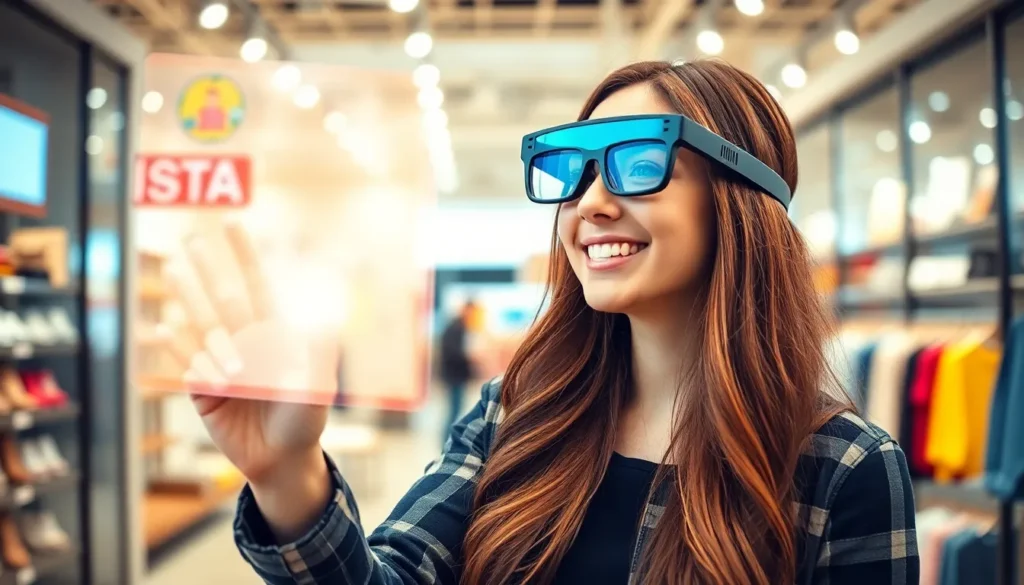
Imagine walking through a museum where exhibits come to life, or trying on clothes without stepping foot in a fitting room. Augmented reality (AR) has transformed the way people interact with the world around them, blending digital elements with real-life experiences. From gaming to education, AR’s potential is as limitless as a kid’s imagination on a sugar rush.
But it’s not just about flashy graphics or cool apps. Companies are harnessing AR to boost sales, enhance training, and improve customer engagement. Whether it’s a virtual try-on for that snazzy jacket or an interactive tutorial for assembling furniture, AR is making everyday tasks a whole lot more exciting—and efficient. Buckle up as we explore the fascinating uses of augmented reality that are reshaping industries and making life just a bit more entertaining.
Overview of Augmented Reality
Augmented reality (AR) integrates digital information with the real world. This technology enhances the user’s surroundings by overlaying digital content and interactive elements.
Definition of Augmented Reality
Augmented reality refers to a technology that superimposes computer-generated images, sounds, and other data onto the real-world environment. This interaction occurs in real-time, enriching user experiences with contextual information. Users experience AR through various devices, including smartphones, tablets, and specialized smart glasses. Geolocation data often aids in displaying content relevant to the user’s current location. Applications include gaming, education, and navigation, making everyday tasks more engaging and informative.
Brief History of Augmented Reality
The concept of augmented reality dates back to the 1960s, with Ivan Sutherland’s creation of the first head-mounted display system. Throughout the 1990s, AR gained traction in military applications, primarily for training and simulations. Commercial interest surged in the early 2000s, driven by developments in mobile technology. The launch of applications like Pokémon GO in 2016 popularized AR in mainstream culture. Since then, industries such as healthcare and retail have increasingly adopted AR to enhance user experiences and improve operational efficiency.
Key Augmented Reality Uses in Industries
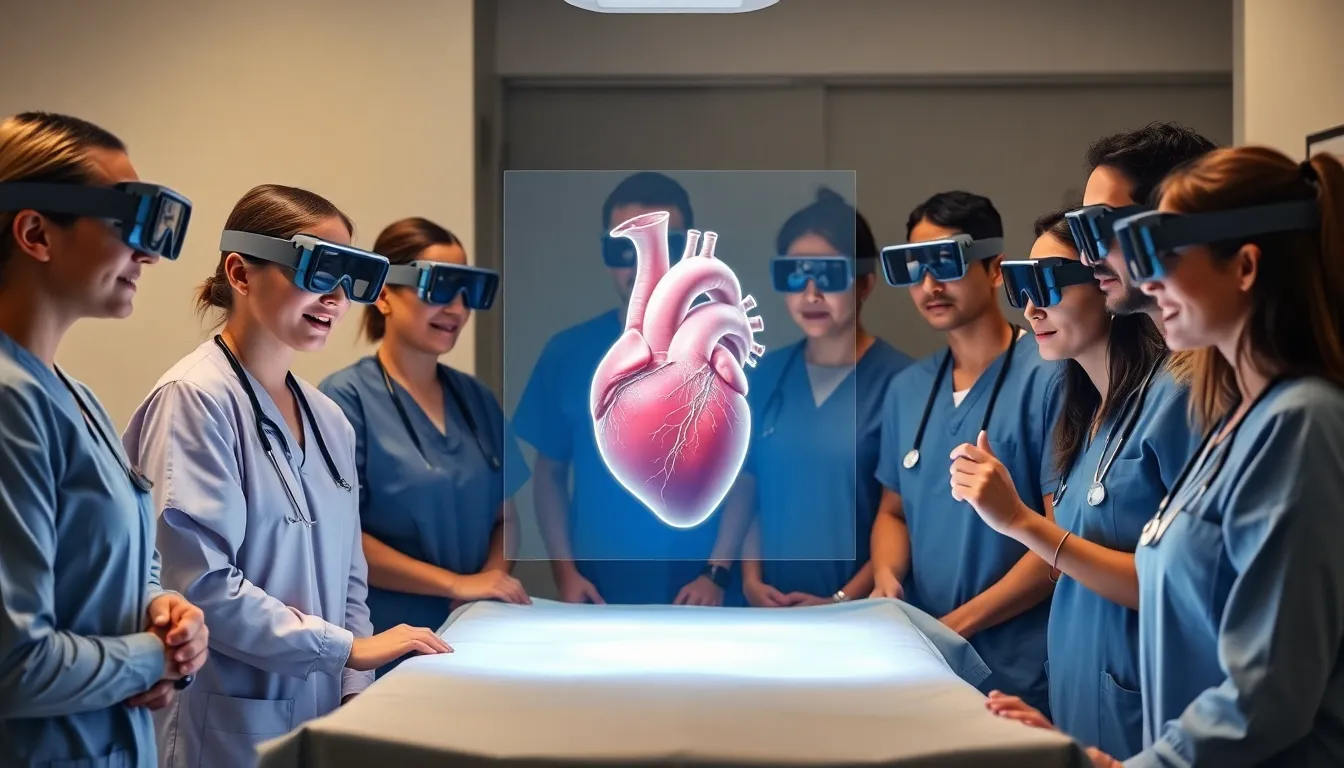
Augmented reality (AR) transforms how industries operate by enhancing user experiences. Various sectors benefit from AR’s unique applications.
Healthcare Applications
Healthcare utilizes AR to improve patient care and training. Surgeons use AR for visualization during procedures, enhancing precision. Medical students benefit from simulating surgeries, enabling hands-on practice without risks. Patient information overlaid during consultations allows for better understanding, facilitating more effective communication. Companies like AccuVein use AR to help locate veins, reducing anxiety for both patients and practitioners.
Education and Training
In education, AR makes learning immersive and interactive. Students can explore complex subjects through 3D models, fostering better comprehension. Training programs use AR to simulate real-world scenarios, improving retention and skill application. Programs like Google Expedition allow virtual field trips, expanding educational boundaries. Collaboration becomes more effective as students and teachers interact within a shared AR environment, promoting engagement.
Retail and E-Commerce
Retailers implement AR to redefine the shopping experience. Virtual try-ons allow customers to see how products fit without physical attempts. Tools like IKEA Place let customers visualize furniture in their homes, leading to informed purchasing decisions. Engagement often increases as brands create interactive marketing campaigns using AR features. Companies like Sephora enhance customer interaction through AR makeup trials, reducing return rates through informed choices.
Gaming and Entertainment
Gaming and entertainment industries lead the AR innovation wave. Titles like Pokémon GO showcase real-world interaction, keeping users engaged. Virtual reality meets AR in gaming, providing immersive experiences that blur the lines of reality. Developers expand narratives and gameplay, creating rich environments that captivate players. Concerts and live events enhance fan experiences through AR elements, revolutionizing how audiences engage with their favorite artists.
Benefits of Augmented Reality Uses
Augmented reality (AR) brings significant benefits across various sectors, enhancing experiences and improving outcomes.
Enhanced User Experience
AR transforms the way users interact with digital information. Digital information overlays interactive elements onto the user’s environment, creating immersive experiences. For instance, AR in retail allows customers to visualize products in their homes before purchasing. This capability reduces uncertainty, leading to better decision-making. Moreover, AR applications often tailor content to individual preferences, increasing relevance and satisfaction. Results show that businesses leveraging AR report higher customer satisfaction rates, with many noting a boost in brand loyalty.
Improved Learning Outcomes
AR enhances educational experiences through immersive learning techniques. Interactive 3D models capture students’ attention, making complex subjects easier to understand. Schools and universities using AR notice improved retention rates. It encourages hands-on learning, allowing students to explore topics like anatomy or astronomy in depth. Medical students, for example, can practice surgical techniques in realistic simulations. Overall, studies indicate that AR-driven education can lead to significant gains in knowledge retention and engagement compared to traditional learning methods.
Increased Engagement
User engagement sees a notable increase with the integration of AR technology. Companies and educators use AR to create interactive experiences that hold users’ attention longer. Gamification elements in AR applications promote active participation, making learning and shopping more enjoyable. The gaming industry exemplifies this trend, as players immerse themselves in AR environments. Event organizers also adopt AR to enhance audience interaction at live events, resulting in more memorable experiences. Analysis of AR campaigns reveals a marked increase in user interaction, proving that AR effectively boosts overall engagement.
Challenges of Implementing Augmented Reality
Implementing augmented reality (AR) presents several challenges that organizations must navigate for successful integration.
Technical Limitations
Technical limitations hinder AR development and user experience. Hardware constraints, such as processing power and battery life, restrict the complexity of AR applications. Many devices lack sufficient capabilities to handle advanced graphics and real-time overlays. Software development also poses challenges. Interoperability between different platforms can complicate app integration. Furthermore, latency issues lead to delays in user interactions, impacting the overall effectiveness of AR experiences.
User Acceptance
User acceptance plays a crucial role in AR’s broader adoption. Some individuals may hesitate to adopt AR due to concerns about privacy and data security. Users often feel uncomfortable sharing personal information required for tailored experiences. Additionally, unfamiliarity with AR technology can create apprehension. Educating users on the benefits and functionalities of AR enhances acceptance, fostering a more engaging interaction. Providing guidance through user-friendly interfaces can help mitigate resistance, making it easier for people to embrace this innovative technology.
Cost Considerations
Cost considerations significantly influence AR implementation. Developing high-quality AR applications demands substantial financial investment. Costs related to software development, training personnel, and obtaining necessary hardware can quickly add up. Many organizations may find it challenging to justify such expenses, particularly when uncertain about user engagement. Smaller companies may experience more barriers due to limited budgets. Strategic planning and ROI analysis can help determine whether AR investment aligns with overall business goals, making it essential to evaluate potential benefits against financial commitments.
Future Trends in Augmented Reality
Emerging trends in augmented reality (AR) reveal a landscape of innovation that will redefine user interactions. Developers harness advancements in machine learning and computer vision to enhance AR experiences. Seamless integration with 5G technology allows for real-time data processing, improving content delivery speed and interactivity. Wearable devices, like smart glasses, are expected to become more sophisticated, featuring advanced displays and intuitive user interfaces. These technologies pave the way for a more immersive and engaging AR experience across various sectors.
Potential new applications of AR suggest a vast horizon for future development. In architecture, AR tools provide real-time visualization of building designs, allowing clients to explore projects interactively. Automotive industries might adopt AR for heads-up displays, empowering drivers with navigation information and safety alerts without distraction. Retail sectors could further innovate with AR-enhanced shopping experiences, letting customers visualize products in their environment before purchase. Health care applications may evolve as AR assists in remote diagnostics, providing specialists with real-time insights during patient consultations. Each new application promises to enhance efficiency and engagement, solidifying AR’s role in everyday life.
Augmented reality is reshaping how individuals interact with the world around them. Its applications span across various industries enhancing experiences and improving efficiency. As AR technology continues to advance the possibilities for innovation seem limitless.
Organizations that embrace AR can expect to see significant benefits in customer engagement and operational effectiveness. With ongoing developments in machine learning and 5G connectivity AR’s future looks promising. As it becomes more integrated into daily life augmented reality is set to redefine user experiences in ways that have yet to be fully realized.