
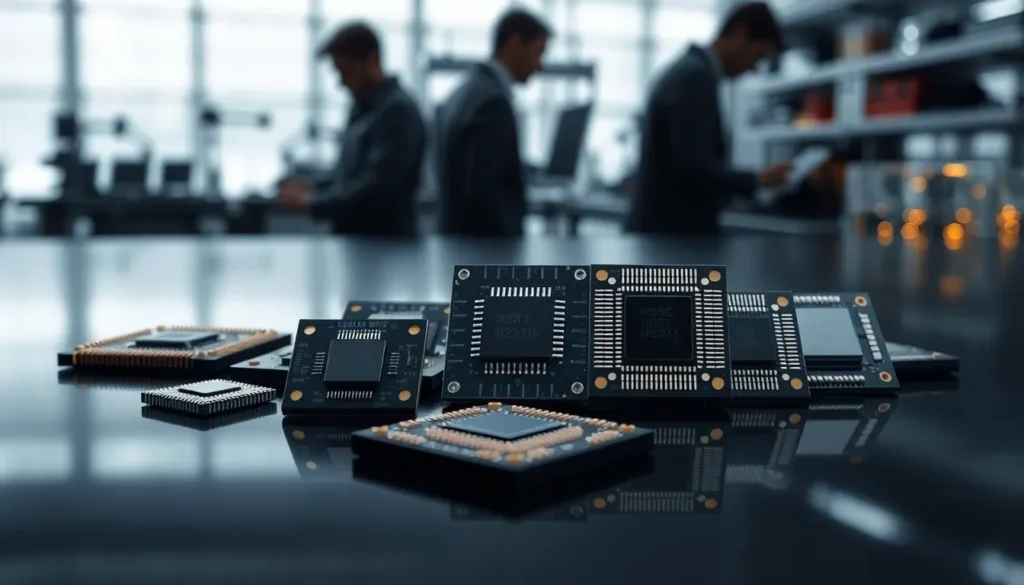
Microchip technology is the unsung hero of our digital age, quietly powering everything from smartphones to smart refrigerators. As the world races toward a future intertwined with the Internet of Things, staying updated on the latest microchip developments is more crucial than ever. After all, who wouldn’t want to know how tiny silicon wonders are shaping the way we live, work, and play?
Recent Advances in Microchip Technology
Recent advancements in microchip technology shape the future of numerous industries. Innovations in this field significantly impact how devices communicate and function.
Breakthrough Innovations
Major strides include the development of neuromorphic chips. These chips mimic the human brain’s processing ability, enhancing machine learning capabilities. Significant improvements in energy efficiency characterize the latest microchips, making devices faster while consuming less power. Companies like Intel and IBM focus on quantum computing chips, pushing the limits of processing speed and performance. The introduction of smaller and more efficient semiconductors enables increased functionality in compact devices, from smartphones to wearables.
Notable Research Developments
Prominent research initiatives explore the integration of AI with microchip technology. Collaborative projects between universities and tech companies aim to create advanced chip architectures that support AI algorithms. Research at Stanford University highlights the potential for optoelectronic chips, which combine electronic and optical functions, leading to ultra-fast data processing capabilities. Another study from MIT emphasizes 3D chip stacking, resulting in improved performance and decreased latency. These developments promise enhanced computing power tailored for emerging applications in various sectors.
Market Trends in Microchip Technology
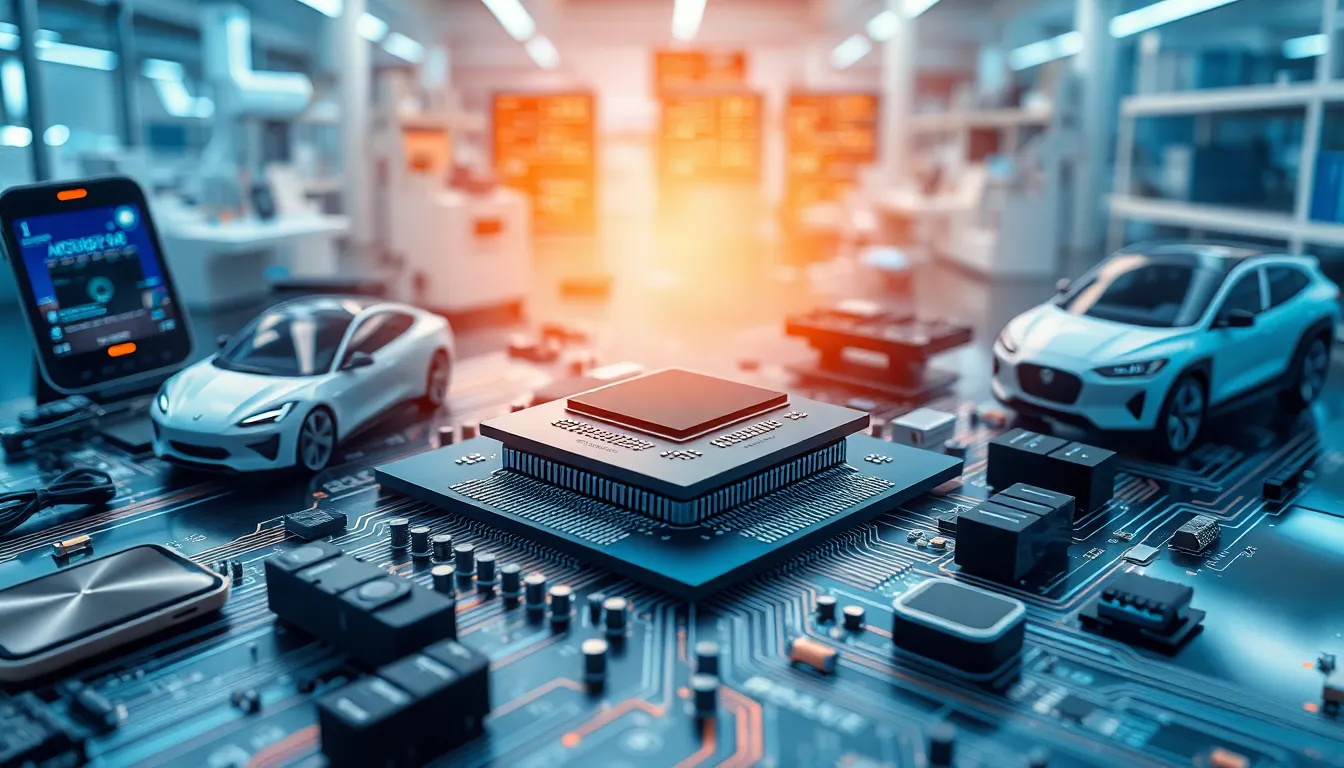
Microchip technology undergoes rapid change, significantly shaping various markets. Increased demand for smart devices drives development in this sector, influencing supply chains.
Demand and Supply Dynamics
Consumer electronics lead the drive for microchips, with a projected growth rate of 8.4% from 2023 to 2030. Automakers increasingly rely on microchip technology for electric vehicles and autonomous driving systems. Manufacturers face challenges in meeting this growing demand due to supply chain disruptions. As a result, companies adjust production capacities to navigate shortages while focusing on diversifying suppliers. Navigating these dynamics remains essential for maintaining competitive edge.
Key Players in the Industry
Key players like Intel and AMD dominate the microchip landscape, continuously innovating their product lines. NVIDIA’s focus on AI-centric architectures positions it as a leader, especially in gaming and data centers. TSMC holds critical importance as the world’s largest contract chip manufacturer. Emerging firms such as Qualcomm also play a significant role in the mobile chip market. Collaboration among these companies accelerates advancements, pushing the boundaries of semiconductor technologies. Companies that adapt quickly to market demands will likely thrive in this evolving industry.
Impact of Microchip Technology on Various Sectors
Microchip technology dramatically influences multiple sectors, enhancing efficiency and enabling innovation. Various industries leverage these advances to improve performance and functionality.
Healthcare Applications
Microchip technology transforms healthcare by enabling precision medicine and telehealth solutions. Wearable devices equipped with microchips monitor vital signs and allow for real-time health tracking. Hospitals utilize chips in diagnostic equipment to increase accuracy and speed. Advanced microchips also facilitate data analysis, aiding in disease prediction and management. Companies like Philips and Medtronic lead efforts in integrating chips with medical devices, enhancing patient outcomes. The ability to process large data sets efficiently supports personalized treatment plans, particularly in chronic disease management.
Automotive Industry Developments
The automotive industry increasingly adopts microchip technology to innovate vehicle design and function. Microchips power electric vehicles, improving battery management and energy efficiency. Autonomous driving relies heavily on advanced chips for real-time data processing and navigation. Companies like Tesla and Ford invest in semiconductor capabilities to enhance vehicle performance and safety. Supply chain issues, however, challenge manufacturers and limit production capacity. The demand for smarter vehicles has fueled growth, with an estimated market growth rate of 10% by 2030. Integration of microchips in automotive systems leads to safer, more efficient transportation solutions.
Future Predictions for Microchip Technology
The future of microchip technology promises exciting advancements and significant impacts across multiple sectors. Innovations continue to accelerate, shaping a more connected world.
Emerging Technologies to Watch
Neuromorphic chips are a major focus, mimicking human brain functions to enhance processing capabilities. Quantum computing is gaining momentum, with companies like Intel and IBM developing chips to revolutionize speed. Additionally, optoelectronic chips are expected to enable ultra-fast data processing for various applications. Integrating artificial intelligence with microchip technology is becoming increasingly prevalent, enhancing chip architectures. As demand for smart devices rises, emerging technologies like 5G and edge computing demand more advanced microchips.
Potential Challenges and Opportunities
Supply chain disruptions present challenges, especially for the automotive industry reliant on microchips for electric vehicles. Manufacturers often struggle to keep up with the demand from rapidly evolving markets. Talent shortages in semiconductor design and fabrication can also hinder innovation. However, opportunities abound for companies that adapt swiftly to these challenges. Investments in research and development can lead to breakthroughs in energy efficiency and processing power. Collaboration across industries will foster innovation and create a more resilient microchip supply chain.
Microchip technology is undeniably at the heart of the digital revolution. As innovations unfold and industries evolve, the impact of these tiny components on everyday life continues to grow. The shift towards smarter devices and advanced applications highlights the necessity for ongoing research and development.
While challenges like supply chain issues remain, the potential for breakthroughs in energy efficiency and processing power is immense. Companies that embrace these changes will not only stay relevant but also lead the charge into a more connected future. The journey of microchip technology is just beginning, and its influence will shape the landscape of tomorrow.